home | site map | contact us | locate us | français |  | bmo.com
Sign in  GO
Corporate Responsibility
  What's Inside
Employees

Embracing diversity


A commitment to diversity

A diverse workforce that mirrors the communities where we work and do business is critical to attracting and retaining talent. At BMO we draw our strength from the diversity of our people and our businesses. BMO partners with community and government agencies to recruit employees from diverse communities.

To support inclusion in our workplace and our communities, BMO regularly consults with employees from 28 Diversity Councils and nine Affinity Groups in Canada and the United States.

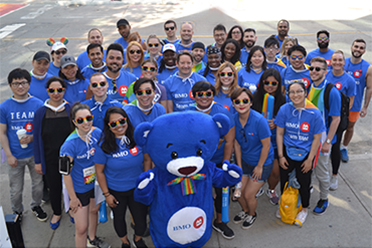
“Through the councils and groups, employees from diverse backgrounds help promote a culture that welcomes – and celebrates – the diversity of our fellow employees and customers,” says Gavin Clark, Investment Advisor at BMO Nesbitt Burns in Toronto and Chair of BMO Pride, our affinity group for lesbian, gay, bisexual and transgendered (LGBT) employees. In 2008, BMO Pride members volunteered at the annual Pride and Remembrance Run, a five-kilometre run sponsored by BMO that raises monies for LGBT-related charities in Toronto.

Quote
"BMO stands out as an employer that understands and supports the complex issues facing young graduates with disabilities and the real issues that people with disabilities face in the workplace."
Frank Smith
National Coordinator
National Educational Association
of Disabled Students

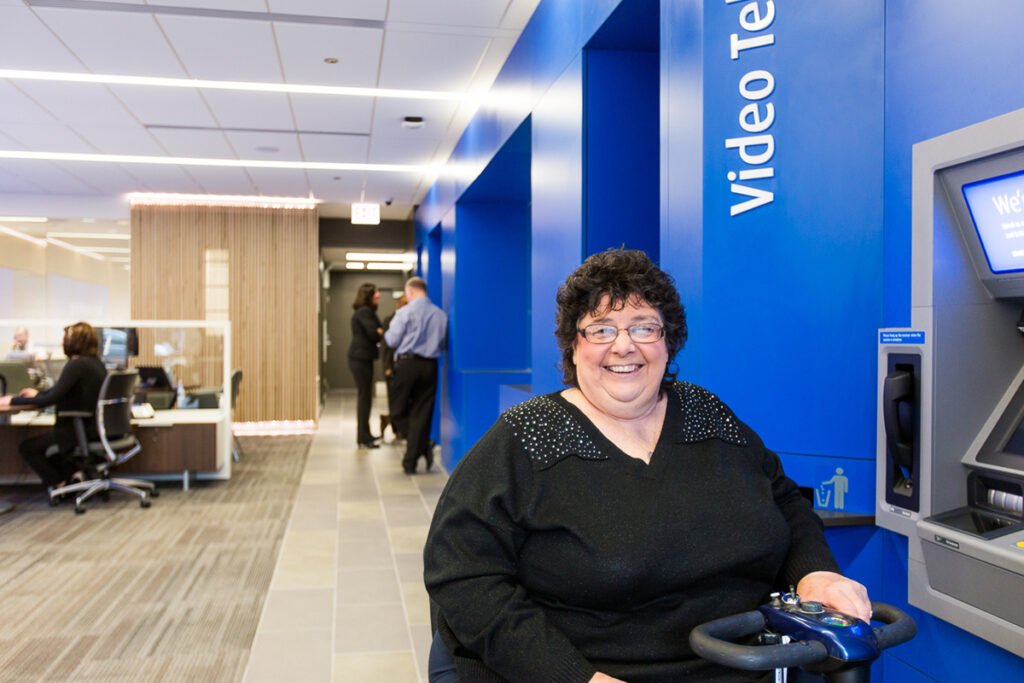
2008 marked the second year of our partnership with JVS Toronto in delivering a six-week pre-employment training program for people with disabilities who possess little or no work experience. This innovative program is designed to close gaps in work experience so that participants can successfully apply for entry-level roles. Nearly 40 candidates have had an opportunity to acquire new skills and experience and receive coaching that facilitated their transition into permanent employment at BMO.

We operate the Ron Jamieson BMO Financial Group Aboriginal Scholarship Program in partnership with the Foundation for the Advancement Aboriginal Youth (FAAY). This program provides students with work experience through paid summer internships and opportunities for permanent employment upon graduation. BMO is now the largest provider of bursaries and scholarships for Aboriginal youth through FAAY. By working with external partners, we are helping to develop the next generation of Aboriginal leaders.

In 2008, BMO also partnered with Lime, a not-for-profit organization that connects corporations with post-secondary students and graduates with disabilities, to launch the BMO Financial Group/Lime Scholarship and Internship Program. This unique initiative is designed to attract talented post-secondary students who happen to have a disability. Successful applicants receive a scholarship and can then compete for a paid summer internship that may lead to a permanent role with our company as a Financial Services Manager or Commercial Account Manager. The program includes comprehensive intake training and ongoing support and mentoring.

We are also building bridges into future talent pools of potential employees and leaders by creating opportunities through education. BMO Capital Markets continues to sponsor Equity Through Education, a unique program that provides educational opportunities to women, visible minorities, people with disabilities and Aboriginal people.

To find out more about BMO affinity groups and diversity initiatives, visit the BMO Career Centre.

Back to top


Forging the link between diversity and business strategy

Quote
"The impact of HR on the bank's strategy can be and must be measured. HR practices must measurably add value. And all of this includes analytics and constant assessment."
Rose Patten
Senior Executive Vice-President
Head of Human Resources and Senior Leadership Advisor
BMO Financial Group
Forging the link between strategy and people drives BMO Financial Group’s Human Resources’ mandate. This means that our people strategies must clearly result in outcomes which enable the bank to successfully execute its customer-focused business strategies.

BMO’s people strategies focus on the importance of talented, engaged and high performing employees. Developing an equitable and supportive workplace, which reflects the diversity of the communities in which we do business, are objectives that are explicitly aligned with strategic initiatives from the top and, subsequently, are carefully measured and connected to performance.

For several years now, BMO Financial Group has been committed to diversity on both sides of the border. Continuous evaluation and assessment have driven positive, measurable change.

Back to top


A history of diversity

In 1990, Tony Comper, then President and Chief Operating Officer of BMO Financial Group, took an industry leadership role in breaking the “glass ceiling” with his milestone decision to sponsor the Task Force on the Advancement of Women. As exemplified by the Task Force’s first report, we were just beginning to understand how accurate data could move diversity forward. The Task Force assembled a statistical profile which gave us the facts about ourselves – who we were, and (even more revealing) who we really weren’t. In other words, when the Task Force members sat down to tell us our problems, and present us with solutions, they had facts.

The statistics revealed that the advancement of women was not a strategic imperative. In order to address the situation, the drive towards creating an equitable workforce was highlighted in BMO's 1990 Corporate Strategic Plan, and a series of other executive-sponsored employee task forces were established to identify relevant issues including the Advancement of Aboriginal Employment (1992), Employment of People with Disabilities (1992), and the Advancement of Visible Minorities (1995). The findings from these reports generated fact-based diversity and workplace equity goals.

In 1992, BMO established a National Advisory Council on the Equitable Workplace to oversee enterprise wide implementation of all workplace equality initiatives. That same year, BMO created the Office of Diversity and Workplace Equity. Comprised of BMO Financial Group’s most senior business line and corporate executives, the Council set the strategic direction for quantitative and qualitative diversity goals, and measured performance against those goals on a quarterly and annual basis. Today, the council is known as the President and CEO’s Council on the Equitable Workplace.

Back to top


Measuring change

Recognizing the value of metrics, BMO’s commitment to diversity and workplace equity continues to be supported by a comprehensive system of goal setting, monitoring and evaluation processes. Through an extensive suite of management information reports, the President and CEO and senior executives monitor progress towards these benchmarks on a quarterly basis.

Through annual performance appraisals, executives are held accountable for meeting their diversity goals. To support executives in monitoring their progress, the Office of Diversity and Workplace Equity developed and implemented a system of posting quarterly results on the corporate intranet.

Another important way we measure progress is by surveying our employees through the Annual Employee Survey (AES). A tool to calculate employee attitudes and opinions, the AES measures opinions about workplace issues, including the enterprise’s commitment to a diverse workforce and an equitable, supportive workplace. Extensive demographic analysis is followed by focus groups and interviews.

The survey includes a Diversity Index, a compilation of questions enabling us to measure how well employees think we are doing. These efforts facilitate lines of business to prioritize diversity action plans and strategies. The Annual Employee Survey diversity results, which measure their qualitative progress, are also available online to all executives.

Back to top